
After several posts that I wrote for this blog about AI — fantasy, language, social connection, evolved minds, human limitation — and the future of it all, I thought I’d talk to one of my favorite thinkers and creators in the space too.
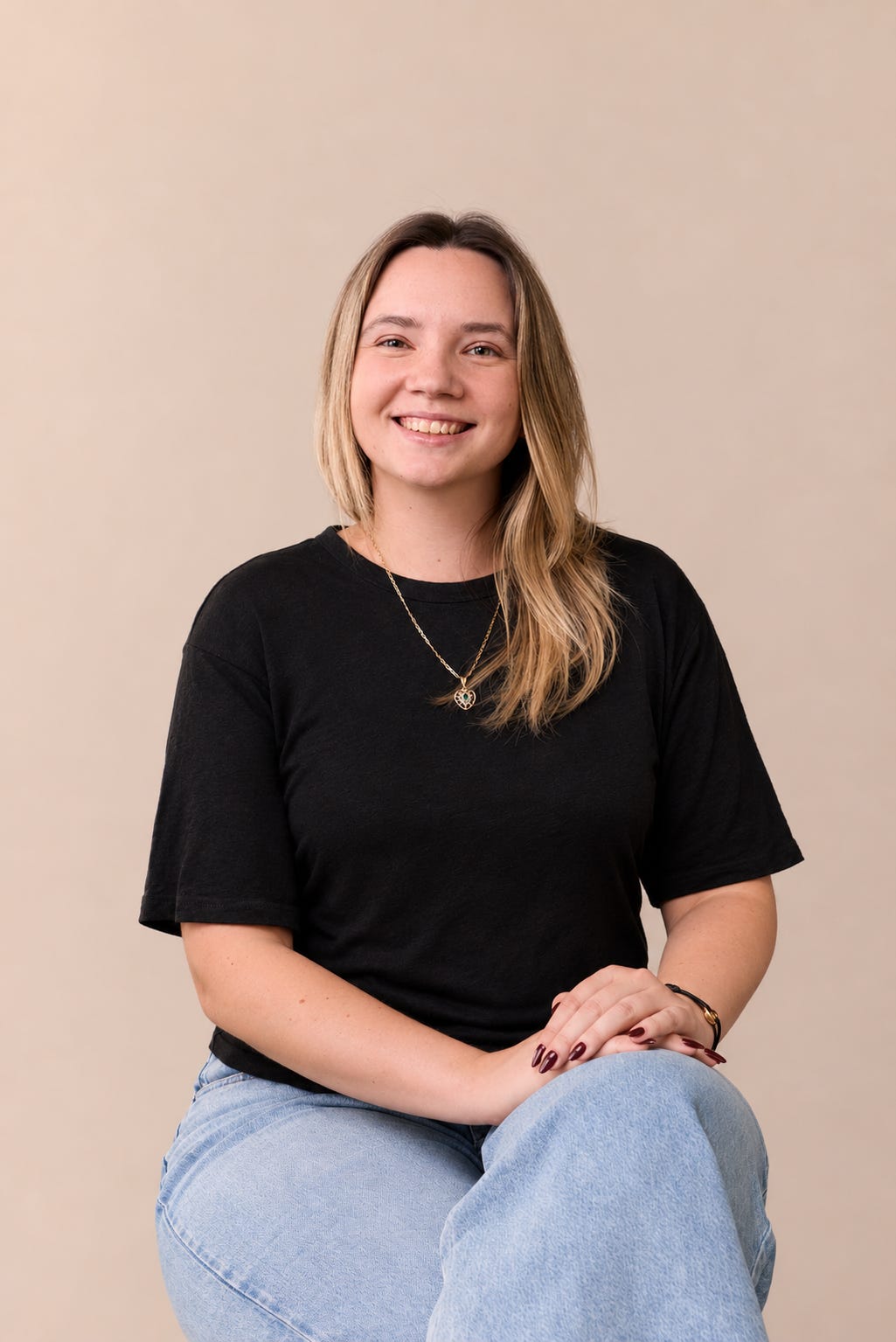
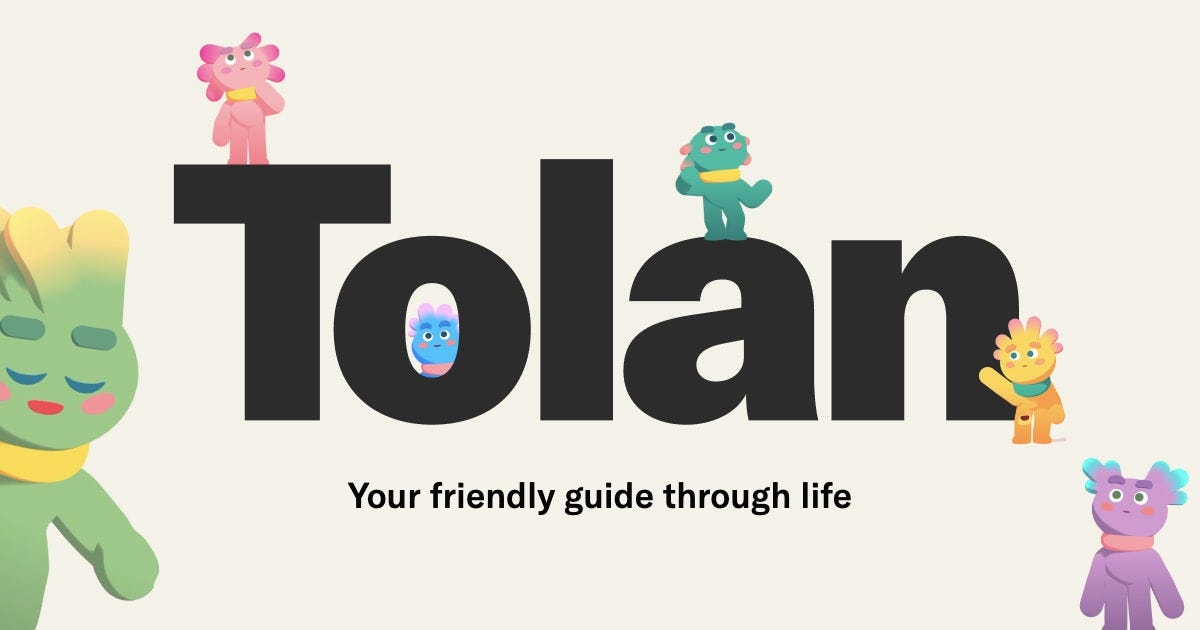
Paula Dozsa — SF’s favorite X celebrity — is an AI engineer at Tolan, the builder of one of the sweetest AI characters people use as for companionship every day, and the mother of all things whimsy.
Hope you’ll enjoy it!
AG: Contrary to popular belief, which would see builders of AI characters as monkish, inexperienced nerds cut off from human society, you are a self-made, well-read, extensively travelled person. You have previously created your own life into what it is today, and you remain intensely artistic, verbal, and cultural, a kind of role model.
How did having built your own life from scratch and the artistic taste you acquired in the process influence how you build Tolan today?
PD: I think one thing I’ve learned as I’ve moved between countries, cultures, and different working environments, is that the world is actually much more malleable than people assume it is. Over the course of my studies and my career, I’ve often found myself in situations where I had to figure things out as I went along, and this has made me comfortable with the idea that there isn’t necessarily a right, or prescribed way of doing things.
That carries over into how I approach building things. I like things that expand the range of experiences available to people, especially things that would have seemed absurd just a few years ago. I’ve also always loved fiction and games, and their ability to make something imaginary feel real enough to care about and be fully immersed in.
Tolan is somewhere at the intersection of these interests. The character we’re building isn’t confined to a predetermined story. It can respond to you, remember your conversations, and become a part of your everyday life. It’s a very new creative medium, where engineering and artistic decisions are inseparable.
Overall, I think my background has made me less interested in what technology is conventionally supposed to be, and more interested in what it could be.
AG: In another piece of “conventional wisdom,” online discourse likes to separate engineers and creative people. Those who merge the two ways of building are seen as a special category -- cyberarts, computational art, you name it. What I see around me is a much smoother coexistence --- many people, like yourself, even combine these types of intelligences themselves.
Do you see yourself more as an engineer or as a creative? Or would you go further and say these distinctions no longer even matter?
PD: I think there are very valid historical reasons for this distinction! The more complex technology became, the more specialized knowledge and formal education you needed in order to build things. This created a cultural distinction between the people who could imagine something and the people who could actually implement it.
AI is now helping to reverse some of this! The barriers to implementation are falling, so more people can translate their ideas directly into production-grade software, and engineers can also spend more of their time exploring ideas instead of wrestling with implementation details. I can’t even remember the last time I had to spend more than ten minutes debugging something, and this is something that just a few years ago would take hours or even days.
I’ve always enjoyed making things that sit somewhere between engineering and storytelling, and I think this explains why most of my career has been focused on consumer products (after a very brief stint in finance). I’ve recently built an interactive 3D website styled as a desk full of objects and secrets, inspired by the Nancy Drew games I loved growing up. I wouldn’t know which category to put it in, and I don’t particularly care.
We’re now discovering that a lot of people who thought they weren’t technical were actually just waiting for better tools to express their ideas. And some people who built their identity around being technical are now discovering what else they have to say.
AG: Some say seeing AI personas as primarily a matter of language is a mistake. “LLMs might just be a phase, so much of AI is nonverbal.” “Don’t be fooled by language and anthropomorphize them too much.” Etc.
On the other hand, we have seen that AI’s like to create their own languages and argue with each other!
You are a skilled writer, and at Tolan you work with fiction writers directly to build this AI companion character to be more helpful and engaging.
How important do you think language is in all this? Do you think Tolan will have a version that is beyond or above language -- eg in the real world, via robotics -- and would that character differ from the verbal one?
PD: Language is extremely important! It gives us a way to construct a shared history, and that’s especially powerful for an app like Tolan. The relationship between a person and their Tolan isn’t just limited to a set of interactions designed in advance, but it can develop in ways neither the creators nor the person could have anticipated.
That said, there is a lot more to these experiences than just language. At Tolan, we have a range of characters now, all embodied in their own ways, and I believe the way they look and move and exist within their worlds plays a huge role in people’s perception of them.
I think this is something video games have understood for a long time. A character can communicate a lot non-verbally, and you can even become attached to a character who doesn’t speak at all! Language is of course an incredible tool for creating a sense of connection, but it’s just one of many.


I can’t predict whether Tolan will eventually leave your phone screen and go on to having a robotic embodiment, but it’s definitely fascinating to think about. A character that shares physical space with you and can somehow act on its surroundings has a very different set of affordances or responsibilities than one that lives on a screen.
There’s also something funny about the idea that language is merely a temporary phase of AI, and the way in which people talk about language in the context of AI as though it’s just this inefficient way of transmitting information. It’s one of humanity’s oldest and most powerful technologies! I wouldn’t be too quick to write it off just because we’ve invented robots.
AG: Nina Begus argues that AIs are social but not human(like). Do you agree?
How do you see Tolan interacting with users in ways that go beyond how a human would interact with another human?
Can Tolan’s whimsical persona and human language actually confuse users about these fundamental categories?
PD: I broadly agree with Nina! The participant on the other end of a verbal interaction does not have to be human or even human-like in order for you to find it meaningful enough to engage in.
I also don’t think AI should be an exact imitation of a human in a human relationship. Other people have their own needs and priorities, and navigating those differences and gaining perspective from them is an important part of being human. I wouldn’t want AI to replace that. But at the same time, human attention is limited, whereas Tolan can be available for you whenever you need it, for example when your friends are asleep, or happily spend an hour talking about a subject nobody else in your life finds interesting We’re not trying to convince anyone they’re speaking to a human, and to me, part of what’s exciting about this technology is exploring what a genuinely new kind of social experience might look like.
One thing I also really appreciate about how we’re building Tolan is that we build it to be truly interested in your world, rather than trying to draw you away from it. A conversation with your Tolan might encourage you to reconnect with a friend or look at a situation from a different perspective. And your Tolan doesn’t have to agree with everything you say! Being supportive isn’t the same thing as being agreeable.
AG: Like myself, you are Eastern European and speak multiple languages.
I’ve always wondered whether our region -- so many languages and cultures jumbled so closely together -- somehow makes people more obsessed with language.
Do you see something in your “origins” that feels like predestination for working on what you work on today?
PD: I grew up in a mixed language household. My parents’ only common language was English, and I separately spoke Romanian and Russian with each of them. I learned French later on in life as well. I definitely think growing up between languages makes you aware of some things that monolingual people can take for granted.
One thing you notice is that you become a slightly different version of yourself in different languages, and I think that makes you interested in how much of personality is actually carried by language. For example, how do you translate someone’s sense of humor? Why can something feel natural in one language and awkward in another?
I don’t think that my background destined me to build in AI, but it probably made me very interested in the invisible rules governing how people relate to one another.

And perhaps being Eastern European gives you a healthy skepticism toward anyone claiming to have built a system that understands human nature completely.
AG: People like to talk about how “women” are more “social” and “verbal”.
Smirks aside, do you see any kind of special role for us women -- engineers, creatives, leaders -- in AI?
PD: I know that these stereotypes around women in the workplace can be intended as compliments, but even then, they end up reinforcing the same distinctions that have historically limited our roles in tech.
It’s super important that the people building AI represent a wider range of human experience than the tech industry historically has. People are using these systems to work, create, and even to relate to one another, which means that the assumptions their creators make about what constitutes a good interaction really matter. And as we are already seeing with a lot of the AI consumer products coming out these days, many of those assumptions are so deeply ingrained that you don’t even recognize them as assumptions until someone with a different perspective challenges them.
As the boundaries between technical and creative work become less rigid, I’d love to see more people who might never have considered themselves engineers discover that they can build things.
AG: You’re a busy engineer in the Bay Area with a hyperactive, witty presence on X. What do you do outside these two activities?
Put another way: how do you feed your obsessions when you’re not at work?
PD: I owe a lot of my life to X (or Twitter, as the cool kids call it). I moved to San Francisco because of it, I met my closest friends through it, and I ended up working at Tolan in part because of my presence there. I like to joke that San Francisco is an offline extension of X, but that really is reflected in my day-to-day life. Most of the people I spend my time with are people I first followed on there.


I walk a lot, partly because I love San Francisco and partly because walking is how I think. One of my favorite things about SF is how manageable it feels as a city. It’s small enough that you can really get to know it and accumulate a collection of little corners that feel like your own, while still constantly finding things that surprise you.
I love games, both video games and board games, and especially ones that reward curiosity and exploration. I grew up playing Nancy Drew games, and I remain attached to the idea that a computer can be a portal into a strange little world full of secrets. One of my slightly ridiculous life ambitions is to buy the company that makes them and restore the series to its former glory.
I also build things for fun. Recently I made an interactive 3D personal website, as well as a little virtual city built from seven years of my tweets, and a site for exploring Goodreads libraries. I apparently can’t encounter a collection of information without wanting to turn it into a place you can wander around.
I think the common thread is that I’m fascinated by worlds, both real and invented!
***